PYTHON / C++ · 6 MONTHS · SOLO
////////
Matchmaking & Rank Distribution
Can a hybrid of machine learning and Bayesian inference out-rank Elo? 2,500 real matches, 125 players, all 25 Valorant ranks — and a merged MARS + TrueSkill-inspired model that most players said felt right.
The question
Competitive games still mostly rank players with Elo-descended systems that watch one signal: wins. This study asked whether a rating built from what a player actually does in a match — combining machine learning with probabilistic inference — could place people more fairly than the legacy systems, using Valorant as the test bed.
The data
2,500 competitive matches from 125 players across all 25 ranks, Iron 1 to Radiant, collected through the Tracker.gg API. Every match carries the full stat sheet — combat (kills, damage, headshot ratios, trades), economy (econ rating, thrifties, clutches), utility usage and round context — so the analysis could ask which numbers actually track skill.
Finding the signal
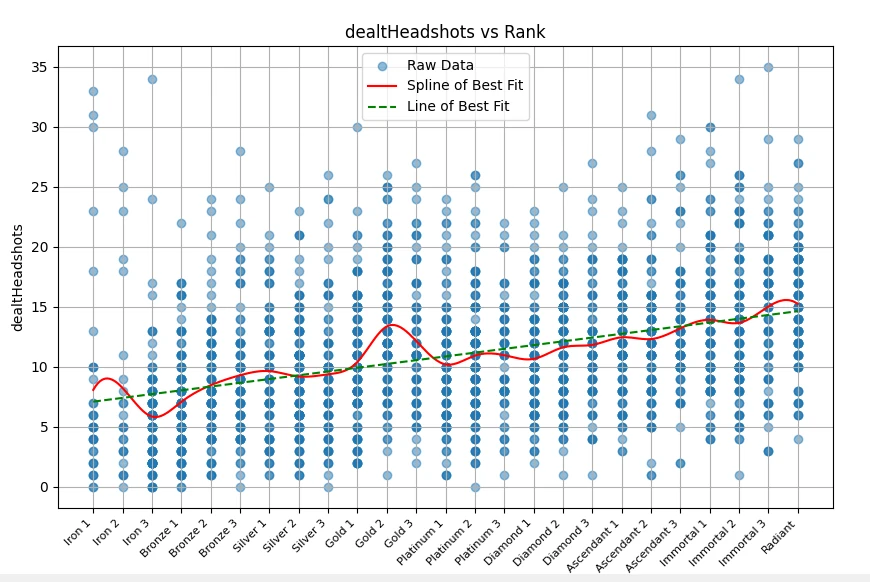
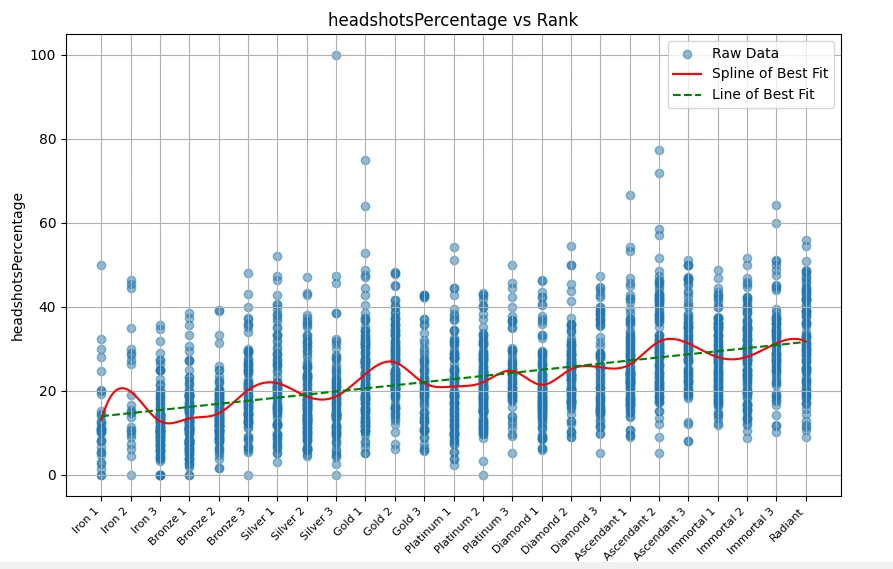
Each statistic was plotted against rank twice: once with a linear regression, once with a spline of best fit. A stat earned “key” status when its linear slope was steep and its spline barely inflected — meaning it climbs steadily with rank instead of wobbling. Headshots dealt, damage per round and headshot percentage passed; flashier stats didn’t. The figures below are the actual plots from the study.
Three models, one season
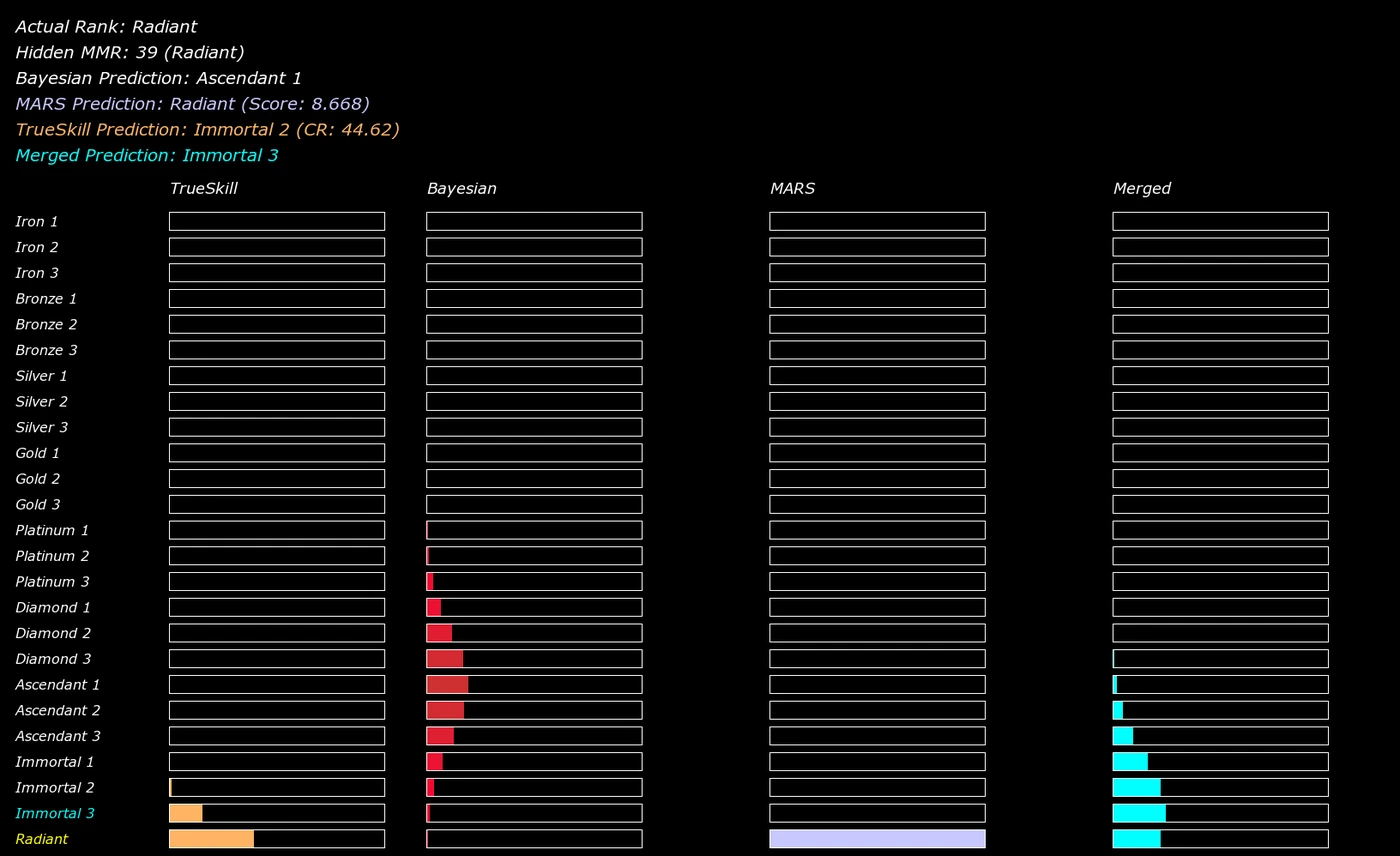
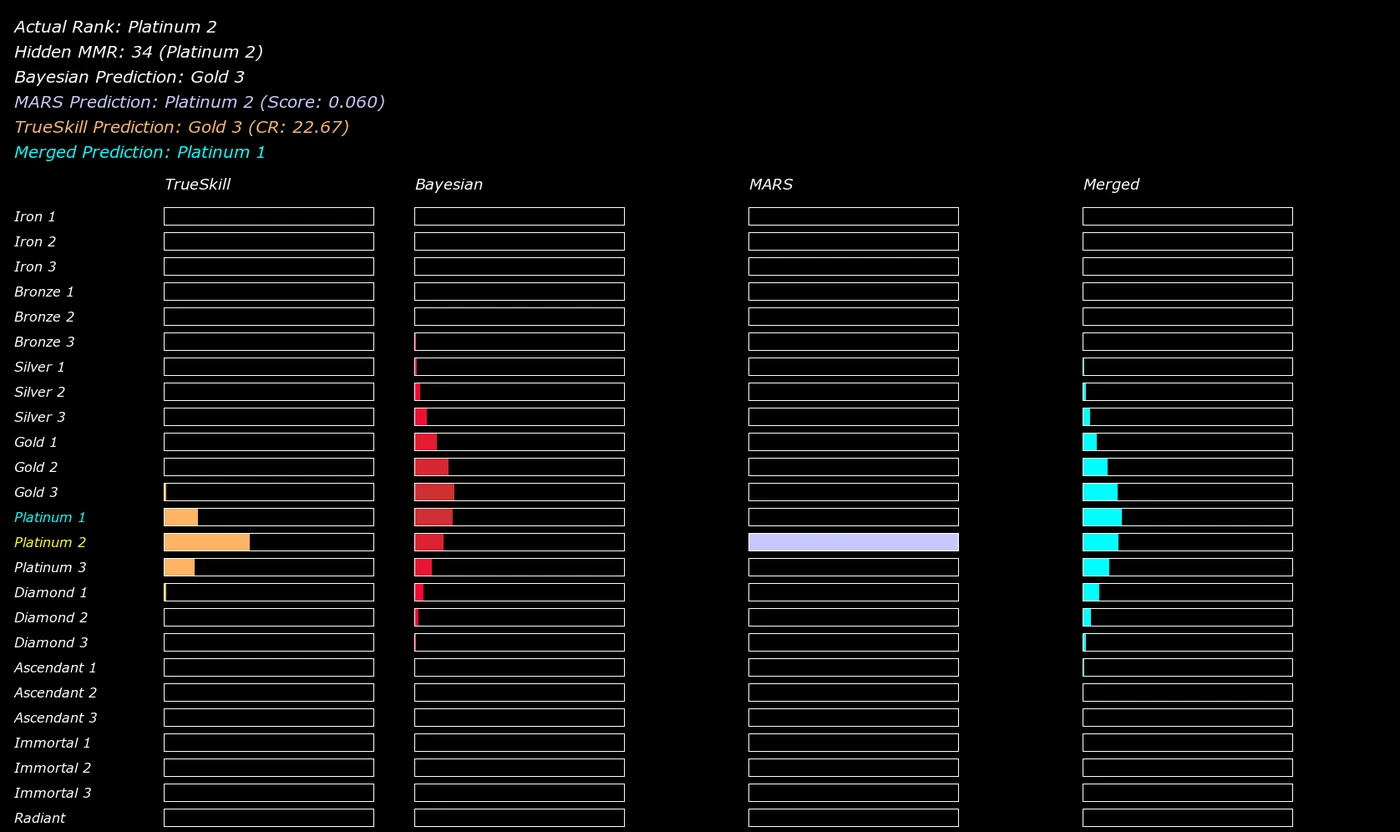
A custom simulation framework replays full seasons of matches and lets rating models compete on the same data:
- MARS only — Multivariate Adaptive Regression Splines over the key stats: interpretable, non-linear, good at performance arcs.
- Bayesian only — a TrueSkill-inspired posterior over skill with quantified uncertainty, responsive in early matches.
- Merged — MARS-derived scores set the prior for the Bayesian update: fast convergence with feature-weighted nuance.
The merged hybrid produced the lowest prediction variance of the three, and in post-simulation surveys ~89% of participants said the merged rank reflected their true skill — including a Radiant-level benchmark (the pro player Tenz) placed correctly at the very top of the ladder.
Where it breaks
The honest part: unranked accounts with sparse, volatile histories inflated their predictions — one Silver-level player was placed at Platinum even after manual correction. The write-up proposes outlier-resistant loss functions (Huber), minimum-match thresholds, per-role submodels for Valorant’s agent classes, and per-round rather than per-game scaling as the next iterations.